
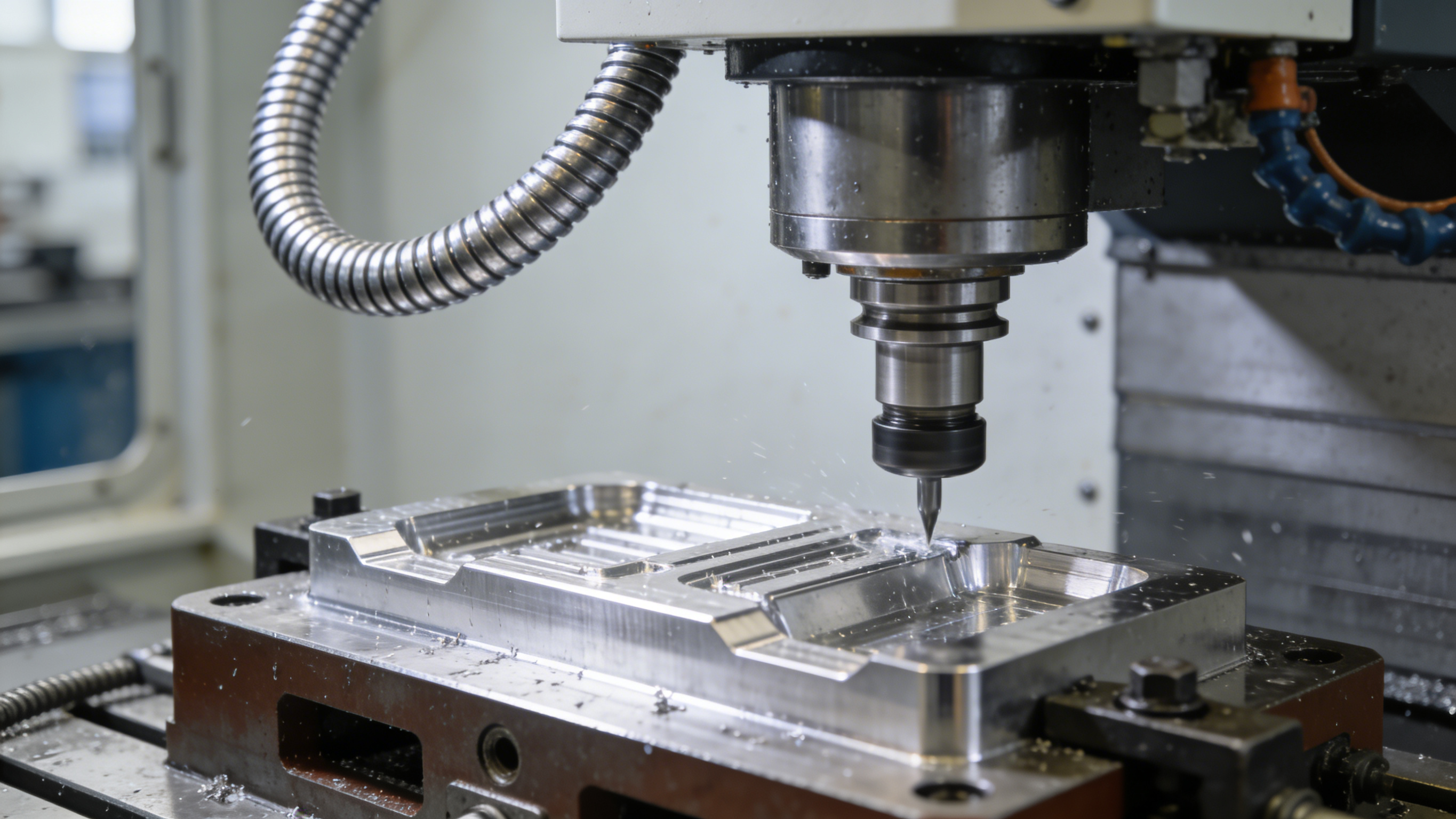
In CNC milling operations, climb milling and conventional milling are the two most fundamental cutting strategies. The choice between them has a direct impact on surface finish, tool life, machining efficiency, and overall production cost.
With the advancement of modern CNC machines—especially the widespread use of high-precision ball screws and servo systems—traditional selection rules have evolved. This article provides a clear, practical, and production-oriented comparison of climb milling and conventional milling, helping manufacturers and engineers make informed decisions to optimize machining performance.

- Definitions and Cutting Principles
- In-Depth Comparison: Climb Milling vs. Conventional Milling
- Application Scenarios and Practical Selection Guide
- A Simple Decision-Making Workflow
- Best Practices for CNC Milling Optimization
1.Definitions and Cutting Principles
What Is Climb Milling?
Climb milling (also known as down milling) occurs when the cutter rotation direction matches the feed direction at the point of contact. The cutting force pulls the tool into the workpiece, and the chip thickness decreases from maximum to zero, creating a “thick-in, thin-out” cutting action.
This allows the tool to engage the material cleanly, reducing friction and improving cutting stability.
What Is Conventional Milling?
Conventional milling (up milling) happens when the cutter rotates against the feed direction. The cutter initially rubs the surface before cutting, causing the chip thickness to increase from zero to maximum, resulting in a “thin-in, thick-out” process.
This rubbing action increases friction and heat at the tool-workpiece interface.


2. In-Depth Comparison: Climb Milling vs. Conventional Milling
2.1 Surface Finish and Machining Quality
Climb Milling Advantages
- Produces a superior surface finish
- Reduces surface tearing, burr formation, and work hardening
- Achieves lower surface roughness (Ra values)
This makes climb milling ideal for precision CNC milling and final finishing operations.
Conventional Milling Characteristics
- More prone to surface scratching and work hardening
- Initial rubbing increases friction before effective cutting begins
- Typically results in a rougher surface finish
2.2 Tool Life and Wear Behavior
Climb Milling
- More stable cutting conditions
- Heat is efficiently carried away by chips
- Significantly reduces flank and edge wear
In real-world CNC production, tool life can increase 2–3 times compared to conventional milling.
Conventional Milling
- Increased friction and heat during initial contact
- Faster tool wear, especially when machining hard or work-hardening materials
- Higher risk of edge degradation
2.3 Cutting Forces and Machine Stability
Climb Milling
- Radial cutting force pushes the workpiece downward, improving fixture stability
- Requires minimal backlash in the feed system
- Best suited for modern CNC machines with ball screws and preload mechanisms
Conventional Milling
- Radial force tends to lift the workpiece, requiring stronger clamping
- Feed-direction force helps compensate for mechanical backlash
- Safer for older machines or systems with limited rigidity
2.4 Power Consumption and Chip Evacuation
Climb Milling
- Lower cutting resistance
- Typically consumes 5–15% less power, sometimes up to 30%
- Chips evacuate smoothly away from the cutting zone
- Reduces risk of surface re-cutting
Conventional Milling
- Higher energy consumption due to friction
- Chips may accumulate near the tool path
- Less efficient chip control in high-speed operations
3. Application Scenarios and Practical Selection Guide
When to Use Climb Milling
Climb milling is strongly recommended when:
- Performing finish machining with high surface quality requirements
- Machining aluminum alloys, titanium alloys, stainless steel, or materials prone to work hardening
- Using modern CNC milling machines with high positional accuracy
- Seeking longer tool life and improved machining efficiency
When to Use Conventional Milling
Conventional milling is more suitable when:
- Machining castings or forgings with hard surface layers
- Removing scale, oxide layers, or uneven surfaces during roughing
- Operating older or manual milling machines
- Prioritizing operational safety over surface finish in early machining stages
4. A Simple Decision-Making Workflow
Use the following three-step logic in real production:
Step 1: Evaluate the Machine Tool
- Modern CNC machine with minimal backlash? → Choose climb milling
- Older machine or visible mechanical clearance? → Use conventional milling
Step 2: Check the Workpiece Condition
- Clean surface or finishing pass? → Climb milling
- Rough casting or forging with hard skin? → Conventional milling for roughing, climb milling for finishing
Step 3: Consider the Material
- Soft, sticky, or work-hardening materials? → Strongly favor climb milling
- General engineering materials? → Decide based on machine condition and operation stage
5. Best Practices for CNC Milling Optimization
In modern CNC machining environments, climb milling has become the preferred standard due to its advantages in surface quality, tool longevity, and energy efficiency. The historical risks associated with backlash have largely been eliminated by precision ball screws and advanced servo control systems.
That said, conventional milling remains an essential complementary strategy, particularly during rough machining or when dealing with challenging surface conditions.
Recommended Strategy:
- Use conventional milling for initial roughing or hard-skin removal
- Switch to climb milling for semi-finishing and finishing operations
- Combine both methods strategically to maximize productivity and machining quality
By applying the correct milling approach at each stage, manufacturers can significantly improve CNC machining efficiency, dimensional accuracy, and overall production consistency—key factors for maintaining competitiveness and long-term growth in precision manufacturing.

Leave a Reply